Glossy or Matte: Choosing a Screen Finish for Your Room
Glossy or matte screen finish comes down to your room’s light: learn how reflections and perceived contrast shape a clearer, more comfortable picture.

On a sunny afternoon, a dark laptop screen can turn into a mirror, showing the window behind your chair more clearly than the scene you meant to watch. Choosing a glossy or matte screen finish starts with that ordinary room problem: where light lands, and what you want the image to look like when it does.
Reflections in context
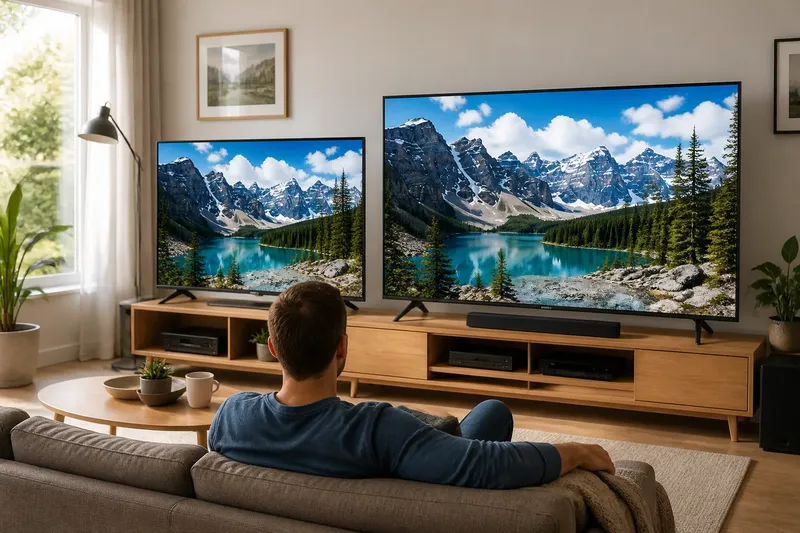
A glossy finish has a smooth surface, so reflections tend to look defined. A bright window or lamp may appear as a distinct patch, sometimes with recognizable edges. This can be distracting when the reflected object sits over subtitles, a face, or a dark part of the picture.
A matte finish scatters reflected light across a broader area. The window may become a soft haze instead of a crisp shape, which can make it less attention-grabbing. But scattered light does not disappear: in a bright room, it can lift the look of dark areas across more of the screen.
Notice the position of the light, not just how much of it the room has. A lamp behind the viewer may reflect directly toward the screen; a window off to the side may miss it. The same display can feel calm in one chair and mirror-like from another.
Contrast and surface
Glossy screens often preserve a punchier impression of dark and bright areas when reflections are controlled. Their clean, direct surface can make colors seem vivid and fine picture details feel crisp. That impression is less useful if the screen is reflecting a bright room over the image.
Matte screens can make the picture seem less contrasty, especially when light is scattered across the panel. Some viewers prefer that softer presentation for long stretches of reading or office work; others miss the depth and sparkle they associate with a glossy image. The difference is about how the surface handles light, not a simple ranking of picture quality.
Surface texture matters, too. A matte coating may give bright details a faintly grainy or hazy appearance, depending on the display and viewing distance. Gloss can show fingerprints and smudges more plainly, while matte may make them less obvious but can still collect dust. Neither finish removes the need for occasional gentle cleaning.
Room light choices
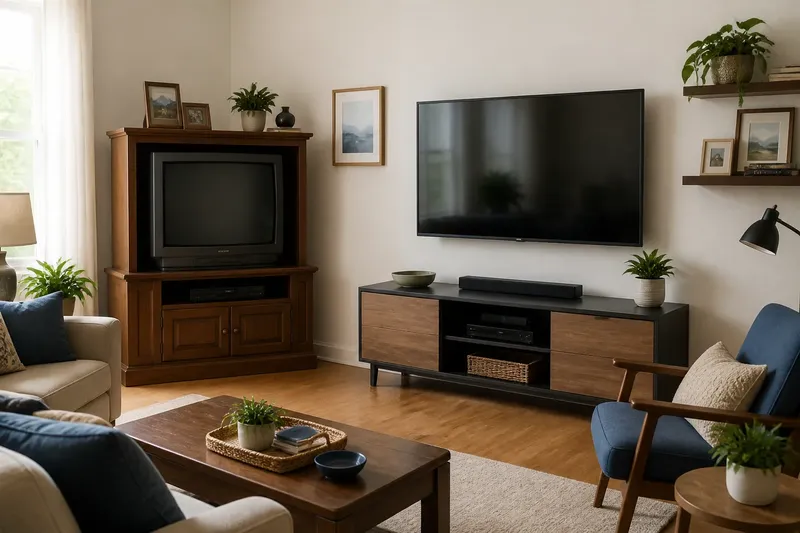
In a room with controllable lighting, glossy may suit a screen used for films, photos, or games, particularly when you can dim lamps and avoid facing a window. A matte finish is often easier to live with in a bright shared space, an office with overhead lights, or a room where furniture cannot be arranged around the display.
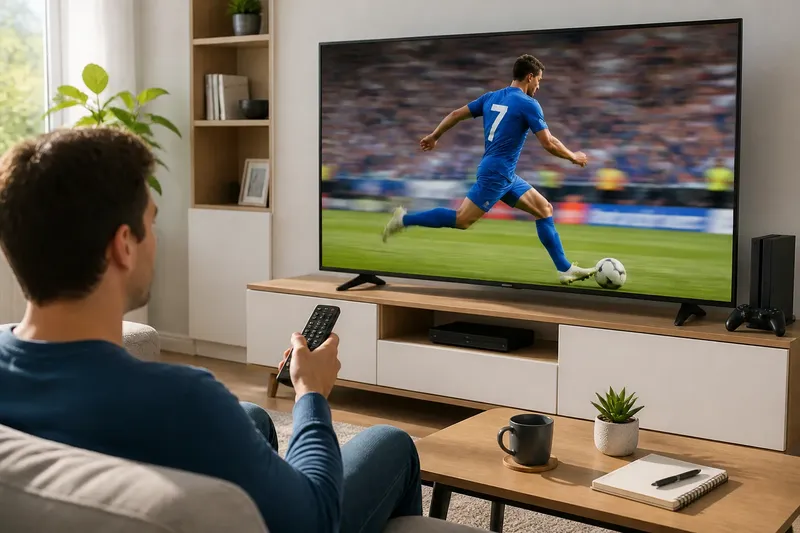
Think about the screen’s busiest hours. A den used for evening viewing may be dark when the display is on, even if daylight fills it earlier. A kitchen screen may face changing light throughout the day, making reflection control more useful than a slightly more vivid look in ideal conditions.
Say you work at a dining table beside a large window, and the screen shows that window across its center in the afternoon. If you cannot move the table or shade the glass, choosing matte would be a reasonable way to soften the reflected shape; the observable result to look for is less distinct glare, not a reflection-free picture. If the screen will mostly be used after dark, that same room may not require matte at all.
Choosing a finish?
Does matte mean no glare?
No. Matte spreads reflected light, which can reduce the sharpness of a reflection, but a bright source can still wash over the image. Changing the screen angle or the light source may matter as much as the coating.
Does glossy always look brighter?
Not in every room. It can make an image feel vivid when reflections are absent, but a reflected window can compete with the picture and make viewing less comfortable. Judge the finish under the lighting you actually expect to use.
Which finish suits a bright room?
Matte is often the more forgiving choice when light sources are hard to control or appear in the screen’s viewing path. If the room has adjustable blinds, well-placed lamps, or a screen that can turn away from windows, glossy may remain a comfortable option.
Can a screen coating be changed?
For most displays, the finish is part of the screen surface rather than a setting you switch on and off. Avoid adding a film unless it is made for that exact display and its maker’s guidance supports it, since an unsuitable layer can alter clarity or touch response.
What to check in person
If you can see the display before buying, look at it from the position where you will sit or stand. A store’s bright ceiling lights can exaggerate reflections, so pay attention to whether they appear as sharp shapes or a broader haze, then consider how your own room differs.
- Locate windows, lamps, and bright doorways that could face the screen.
- Check whether you can shift the display, chair, blinds, or light source.
- Look at dark scenes as well as bright ones, since reflections stand out differently.
- Notice whether the surface texture bothers you at your usual viewing distance.
- Consider fingerprints and cleaning habits if the screen is touched often.
It is not worth rearranging an entire room to chase a perfect-looking reflection in one brief viewing. A modest change, such as turning a desk away from a window or closing a blind during screen time, may be easier to live with than selecting a finish for an imagined ideal.
A room-first decision
Choose glossy when you can keep direct reflections out of the viewing path and value a more immediate, high-contrast impression. Choose matte when room light is less predictable and softening distinct reflections matters more than preserving that extra visual punch.
For a glossy or matte screen finish, the useful question is not which surface wins in every setting, but which compromise you will notice less in your own room. Picture the screen at its usual hour, from its usual seat, with the lights in their usual places; that small mental check often makes the trade-off clear.